“IN THE FOOTSTEPS OF ROMAN EMPERORS” EXHIBITION IN BUDAPEST (HUNGARY)
On 23 November 2026, at the Aquincum Museum in Budapest, the exhibition “In the Footsteps of Roman Emperors” was officially opened, organised by the Institute of Archaeology in Belgrade and the Aquincum Museum, which operates as part of the Budapest History Museum. The exhibition was realised with the support of the Ministry of Culture of the Republic of Serbia, as part of the “Year of Serbian Culture in Hungary 2026” initiative.
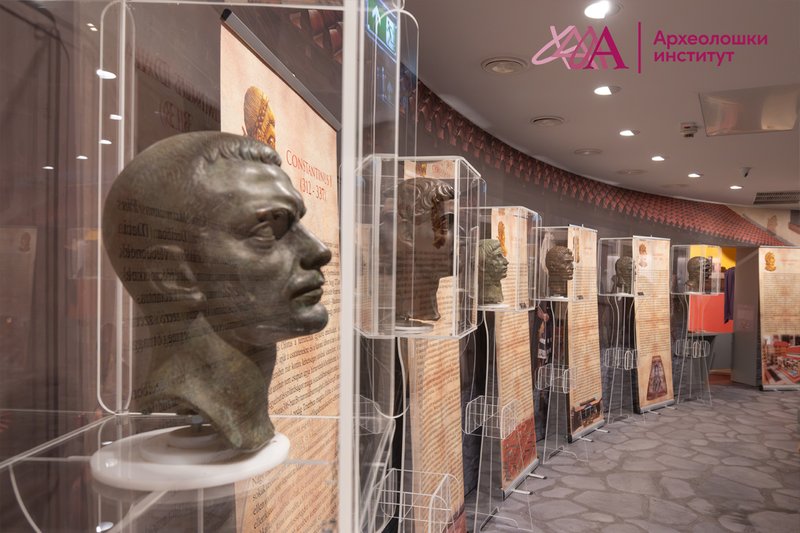
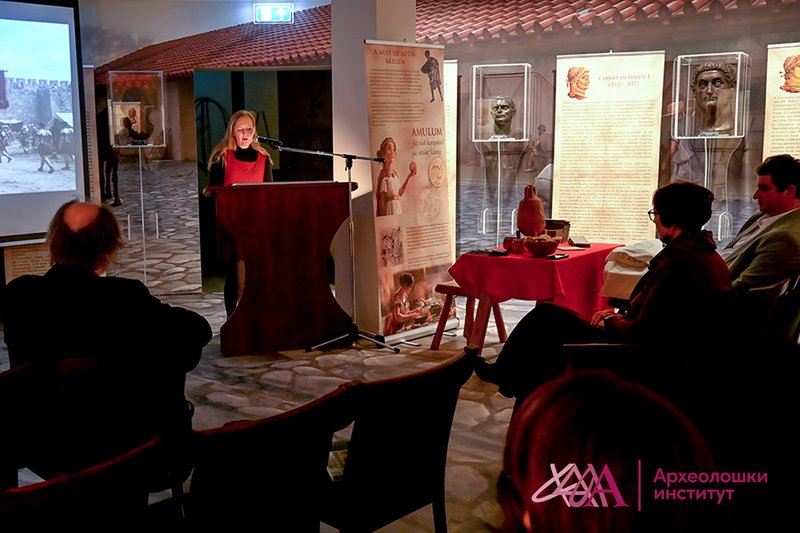
The exhibition features 18 replicas of portraits of Roman emperors born in the territory of present-day Serbia, accompanied by informative panels and publications in Hungarian, introducing visitors to the exceptional significance of Serbia’s Roman cultural heritage.
At the opening ceremony, the audience was first addressed by Dr László Csorba, Director of the Budapest History Museum, followed by Dr Orsolya Láng, who expressed her great satisfaction with the exhibition being held at Aquincum. She particularly emphasised the importance of the longstanding cooperation between Hungarian and Serbian archaeologists, as well as plans to further strengthen this collaboration through joint professional and educational workshops at both Aquincum and Viminacium.
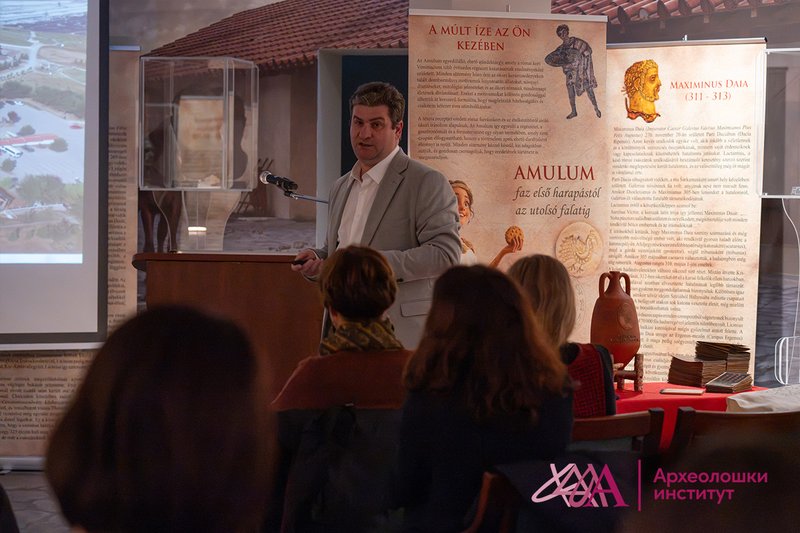
Dr Angelina Raičković Savić presented the concept and content of the exhibition, highlighting the importance of presenting Serbia’s Roman cultural heritage to an international audience, while Dr Nemanja Mrđić spoke about the Roman Limes, its significance, and the historical connections between Aquincum and Viminacium.
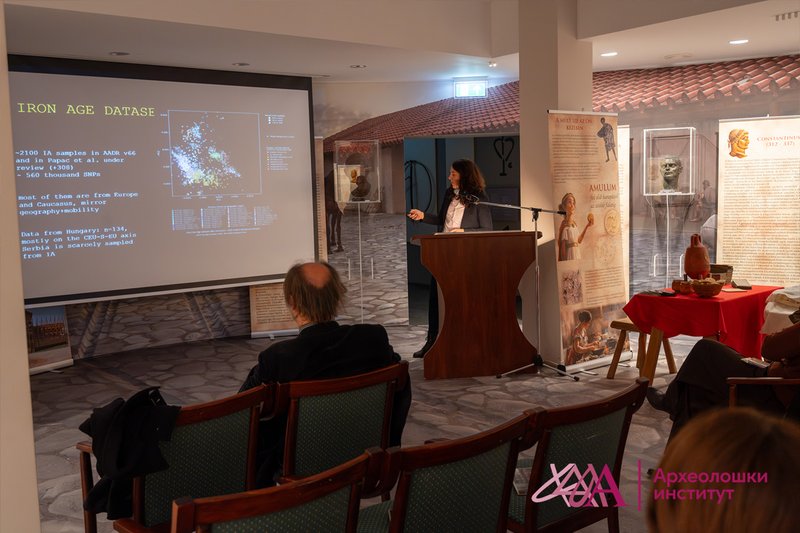
As part of the accompanying professional programme, Dr Anna Szécsényi-Nagy, archaeologist and archaeogeneticist, delivered a lecture dedicated to the analysis of archaeozoological and anthropological material from Aquincum and Viminacium, presenting another concrete example of successful longstanding scientific cooperation between Serbian and Hungarian colleagues.
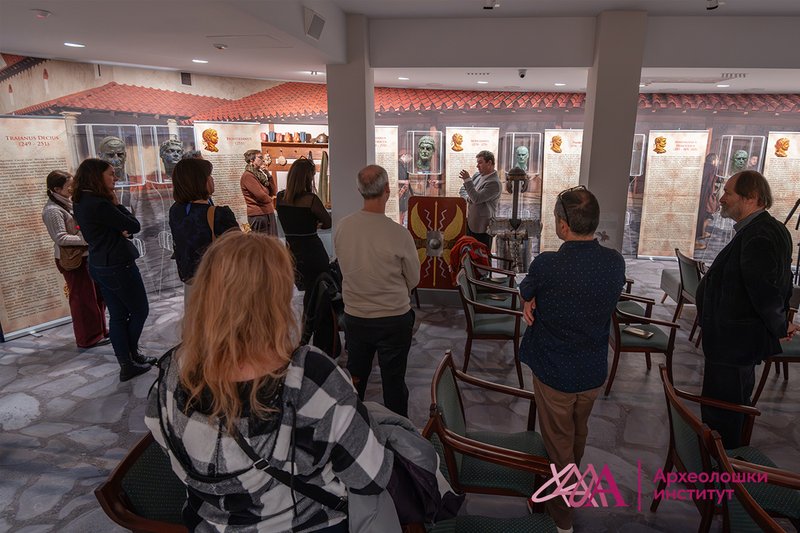
Following the opening ceremony, Dr Nemanja Mrđić led an expert-guided tour of the exhibition, while other members of the Institute of Archaeology team were available to answer visitors’ questions and engage in further discussions.
A special segment of the event was the presentation of AMULUM, an innovative gastronomic souvenir inspired by Roman traditions and archaeological finds from Viminacium. A tasting was organised for the guests, while visitors to the exhibition will also have the opportunity to discover this unique combination of archaeology, gastronomy, and contemporary creative entrepreneurship.
The opening of the exhibition represents another significant step towards strengthening international scientific and cultural cooperation, promoting Serbia’s archaeological heritage, and connecting two important ancient centres along the Danube – Aquincum and Viminacium.
The exhibition will remain open to visitors until 20 December 2026.