
2026 ARCHAEOLOGICAL FIELDWORK AT CARIČIN GRAD
Throughout 2026, archaeological investigations continued at Caričin Grad (Justiniana Prima) and in the surroundings of this important Justinianic metropolis of Illyricum. This year’s fieldwork comprised two research campaigns focusing on the architecture and spatial organisation of the Lower Town, as well as the water supply system of this significant sixth-century urban centre.
Archaeological Investigations in the Lower Town
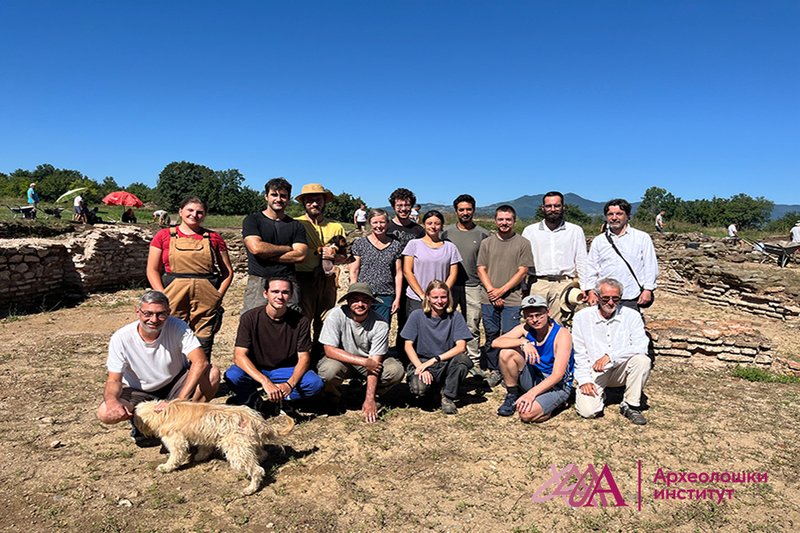
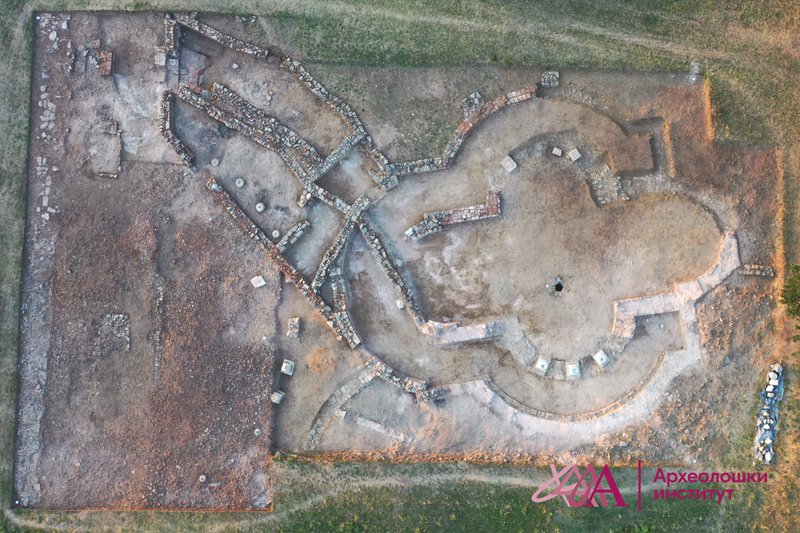
As part of nearly five decades of scientific cooperation between the Institute of Archaeology and the French School in Rome (École française de Rome), archaeological excavations in the central part of the Lower Town were completed in July. The investigations encompassed the area of the Tetraconch Church, the semicircular Sigma Square in front of the church façade, and the partial documentation of an adjacent street.
The research results confirmed that the construction of the church and square had largely been completed before their collapse, most likely due to structural problems. Following the collapse, the area was rapidly reorganised, and part of the public space was privatised through the construction of a large building over the northwestern section of the ruins. Most of the square, although modified in form, continued to be intensively used as a public space.
These discoveries provide new insights into the architectural development of the Lower Town, the transformation of public spaces, and the dynamics of urban life at Caričin Grad.
Investigations of the Caričin Grad Aqueduct
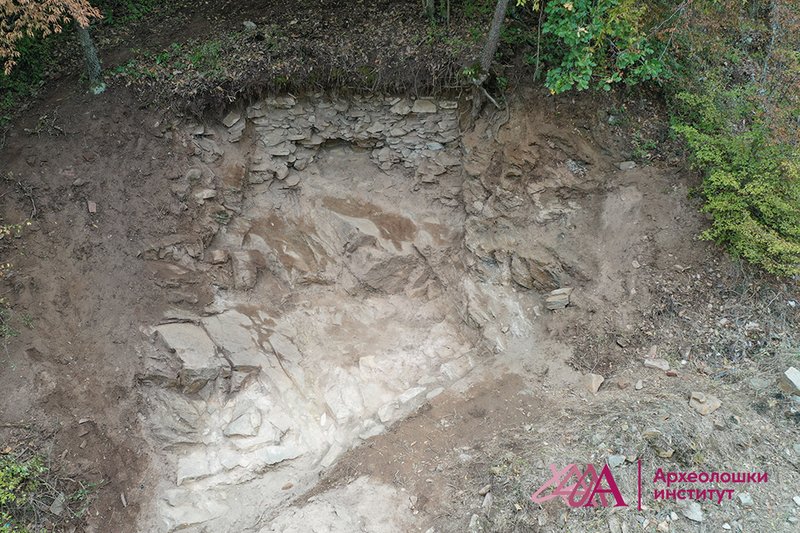
In October, the Serbian research team conducted two weeks of archaeological trial excavations of the aqueduct channel and sections of its bridge, within the framework of a three-year project of the Serbian Academy of Sciences and Arts (SASA) dedicated to the water supply of this Late Antique urban centre.
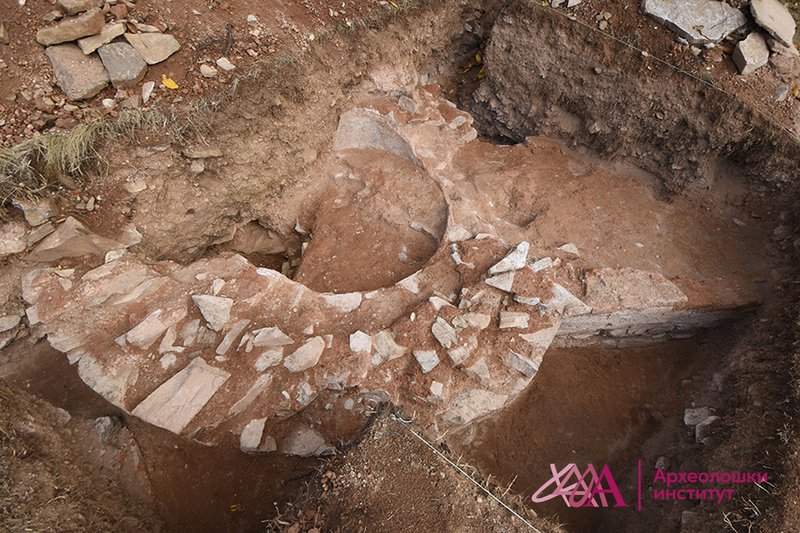
This year’s excavations represent a continuation of several years of research and investigation of the aqueduct’s route, which extends for approximately 22 kilometres. Remains of the channel were recorded in all excavated trenches, while one of the most significant discoveries was a circular reservoir designed to slow the flow of water before it reached the bridge.
Particular attention was devoted to investigating the remains of the aqueduct bridge, which was approximately 120 metres long. During this year’s campaign, its massive terminal supports (pylons) were cleared and documented.
The results contribute to a better understanding of the engineering solutions and functioning of the complex water supply system of Caričin Grad.
The archaeological investigations at Caričin Grad are directed by Dr Catherine Vanderheyde and Dr Ivan Bugarski, while Dr Vujadin Ivanišević serves as a consultant and director of the SASA project. The research team also included Vladan Zdravković, an architect from the Institute for Byzantine Studies of the Serbian Academy of Sciences and Arts, and Uroš Lekić, a graduate archaeologist.
The results of this year’s investigations represent a significant contribution to the study of urban planning, architecture, and infrastructure at Caričin Grad, as well as to the continuation of longstanding international scientific cooperation in the study of one of the most important Late Antique archaeological sites in Serbia.